





Discover how to build high-intent Apple Ads competitor campaigns in the GCC with localized targeting, messaging, and the App Store experiences that turn competitor searches into customers.
The GCC is one of the most connected mobile markets in the world, with strong 5G adoption* and a rapid shift toward digital payments* across the region. That makes the App Store a key decision point for users discovering and comparing apps in fintech, food delivery, travel, mobility, retail, and entertainment.
Consumers in the GCC also tend to evaluate apps through a local lens. In practice, that means looking at language support, payment methods, trust signals, and how well an app fits everyday habits. Research on GCC digital behavior shows that country-level preferences matter, with Saudi users often responding strongly to Arabic-first experiences and local relevance, while UAE users are more likely to compare regional and international brands side by side.
That is what makes competitor campaigns one of the highest-intent opportunities on Apple Ads in the GCC. A search for a competitor usually means the user is actively comparing options, not simply showing loyalty to one brand.
Sources: Ericsson | Visa Perspectives | AnyMind |
Not Every Competitor Needs to Be Targeted
One of the biggest mistakes advertisers make is assuming every competitor keyword is worth pursuing. In reality, the strongest opportunities come from competitors that closely match the user's intent.
For example, someone searching for a ride-hailing app may be comparing pricing, coverage, or subscription benefits, not showing loyalty to a single brand. In fintech, users often evaluate trust, onboarding, Arabic support, and payment convenience before downloading an app.
The goal isn't to target every recognizable competitor. Instead, focus on competitors solving the same customer problem and competing for the same user intent.
It's also important to remember that the GCC isn't one homogeneous market. User expectations differ across Saudi Arabia, the UAE, and other GCC countries, so competitor strategies should be tailored to each market rather than applied across the region.
Sources: Visa Perspectives | AnyMind |
How to Build a Profitable Competitor Campaign Strategy
Competitor campaigns work best as a consideration-stage acquisition strategy. They should support brand, category, and discovery campaigns by helping advertisers reach users while they are actively comparing options on the App Store.
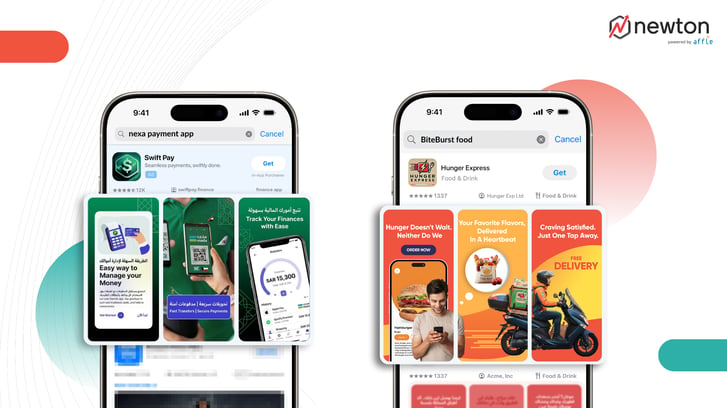
1. Prioritize Relevant Competitors
Start by identifying competitors whose audiences overlap most closely with your own.
The strongest opportunities usually come from direct competitors or apps that solve the same problem in the same market. In the GCC, that may mean comparing against local leaders, regional super apps, or international brands that have strong visibility in specific countries. Understanding why users search for a competitor is often more valuable than the keyword itself.
2. Align Campaigns With User Intent
A competitor search usually reflects evaluation, not loyalty.
Depending on the category, users may be comparing rewards, convenience, customer service, delivery coverage, pricing, or local payment options. In fintech, trust becomes even more important. Across GCC markets, users often look for apps that support familiar payment methods, offer clear security signals, and feel credible enough to handle everyday transactions
Source: QDB | Visa Perspectives |
Understanding these motivations helps advertisers focus on competitor searches that are more likely to drive meaningful business outcomes, not just installs.
3. Strengthen Conversion Through Localization
Winning the tap is only the first step. Converting users after they reach your product page is just as important.
Localization in the GCC goes far beyond translating copy into Arabic. High-performing campaigns reflect local language preferences, cultural context, payment behaviour, and seasonal moments that matter to consumers in the region. Campaigns tied to Ramadan, Eid, White Friday, Saudi National Day, UAE National Day, or back-to-school periods often feel more relevant because they match how people shop, travel, and spend throughout the year
Source: AnyMind |
The GCC's multilingual audience also creates opportunities to personalize experiences through custom product pages. That allows advertisers to tailor messaging for Arabic and English users, highlight country-specific offers, tailor custom product pages with deep links, use right-to-left font style, and speak to different audience segments without relying on a single generic product page. This can strengthen this strategy by creating a more relevant path to conversion.
Measure Competitor Campaigns Through Business Outcomes
Competitor keywords often cost more than branded terms because they reach users closer to making a decision.
That is why success should not be measured by installs alone. The real question is whether those installs turn into funded accounts, completed bookings, repeat orders, subscriptions, or higher lifetime value. A competitor campaign that brings in fewer users but stronger downstream performance can be far more valuable than one that drives cheap installs with weak retention..png?width=1920&height=1080&name=Gcc%20blog%20(1).png)
The most effective Apple Ads strategies in the GCC optimize for business impact, not just acquisition volume.
The Future of Competitor Campaigns in the GCC
As digital ecosystems across the GCC continue to mature, competition on the App Store will become even more localized. Users in Riyadh, Jeddah, Dubai, Abu Dhabi, Doha, Kuwait City, Manama, and Muscat are not all looking for the same thing. Their expectations differ by country, language, payment preference, and category.
Advertisers that understand these regional differences, adapt their messaging to each market, and build localized App Store experiences will be better positioned to win high-intent users at the moment they are ready to decide.
Ultimately, successful competitor campaigns in the GCC are not about targeting more competitor keywords. They are about understanding why users are searching in the first place and giving them a compelling reason to choose your app over the alternatives that matter most in their market.
