





As India’s financial year-end approaches, users increasingly search for apps that help with tax planning, expense tracking, and last-minute investments. Discover how finance apps can capture this high-intent demand before the March 31 deadline.
As we approach the mid-March peak of India’s financial year-end rush, the pressure is building for many taxpayers as the clock ticks down to March 31st. The stress of organizing finances, tracking expenses, and preparing for tax savings becomes overwhelming. This is when tax payers start looking for tax-saving, tax planning, and filing-preparation tools across finance apps. While ITR filing itself typically peaks later,this is the moment when users start feeling the weight of the deadline and urgently seek solutions to get their financial house in order. It’s a time of uncertainty, and they need the right tools to help guide them through the final stretch.
For iOS marketers, Apple Ads is a powerful way to reach users at the exact moment they are looking for these services. This timing aligns with how consumers behave: mobile finance app usage is growing rapidly, with global financial app downloads rising from 4.6 billion in 2020 to an estimated 7.7 billion in 2024, and India alone accounting for around 1.7 billion downloads of finance apps in 2024. To maximize impact, the key is aligning the timing with the right app category.
In this blog, we’ll break down the peak timing for App marketing around the March 31 window and the finance app categories most likely to see demand spikes. For each category, we’ll outline tailored strategies that match user intent and business goals.
Peak Timing in India’s Tax Filing Season
Understanding when users are most likely to engage with tax-related apps is crucial for App marketing success. Here’s how you should plan your campaigns in relation to the tax filing deadline:
Mid-March to March 31st: The Critical Period
● Mid-March (March 15th - March 20th)
Users start realizing that the financial year-end deadline is near. People start searching for terms like "tax planning," "investment options," "deductions," and "expense tracker". This is the time to set up your campaigns, bidding on high-intent keywords to capture the late surge in users looking to make the most of their tax-saving opportunities before the end of the fiscal year.
● March 21st - March 28th
This is the period when people get serious about tax planning and turn to apps for last-minute help. Increase your bids for targeted keywords and consider a multi-placement ad strategy to attract users who are browsing but haven’t yet decided on a solution. Apple Ads ad scheduling could be particularly effective here, targeting the evening hours when users may be reviewing their finances after work.
● March 29th - March 31st
As the financial year-end approaches, people scramble to sort out their finances, as making tax mistakes before 31 March can lead to higher tax liabilities for the entire year. During these final days, people look for tax-related apps. Conversion rates are likely to be higher as users rush to download apps that can help them quickly finalize their tax-saving plans. This is the time to ramp up bid adjustments to stay competitive and ensure your app appears at the top of search results ads, capturing the attention of users in their last-minute rush.
Major Categories of Finance Apps and Tailored App Marketing Strategies
1. Tax Filing Apps/ Tax Refund Estimator (Preparatory Searches Pre‑Filing)
Peak Demand:
Ahead of the March 31 financial year-end, demand for tax filing prep tools peaks as users start organizing everything for filing later in the year.
App Marketing Strategy:
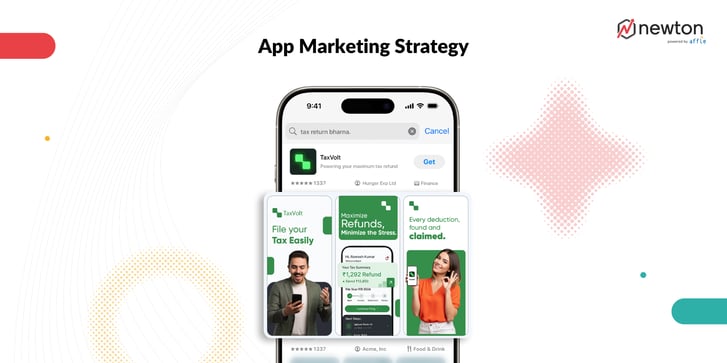
● Expand keyword coverage across English, Hindi, and Hinglish variations such as: “file income tax return”, “ITR filing app”, “इनकम टैक्स रिटर्न फाइल”, “tax return bharna”
● In‑App Events: Create an interactive in-app event like a “Tax Prep Countdown” with daily tasks to complete, encouraging users to open the app daily, reward users for completing tasks with small incentives, such as unlocking premium features for tax tools. This helps in improving discoverability and engagement
● Ad Placements: Focus on search results ads for high-intent keywords. Use the Search tab ads and Today tab ads for brand awareness, especially when users are in the discovery phase, and use product pages ads to tap into users who are exploring similar category apps
● Custom product pages: During FY-end, users search to complete a financial action, not explore features. Create custom product pages that clearly reflect those actions, step-by-step guides, and try a video format for custom product pages of a walkthrough of the app’s tax prep tools. For instance, show how users can organize receipts and track deductions in 3 easy steps. Use deep links to direct users to the exact in-app destination for better relevance and conversion
2. Expense Tracking and Budgeting App
As users organize records for year-end planning and filing prep, demand rises for tools that track expenses, savings, and deductions.
App Marketing Strategy:
● Target keywords: Bid on “expense tracker”, “budget planner”, “deduction tracker”, “financial management”, and similar terms which are relevant to your app’s features
● Search Match campaigns: Use Search Match to discover relevant search terms you may be missing, then move the top-performing search terms to brand, competitor, or generic campaigns. Add negatives where needed to avoid irrelevant search terms
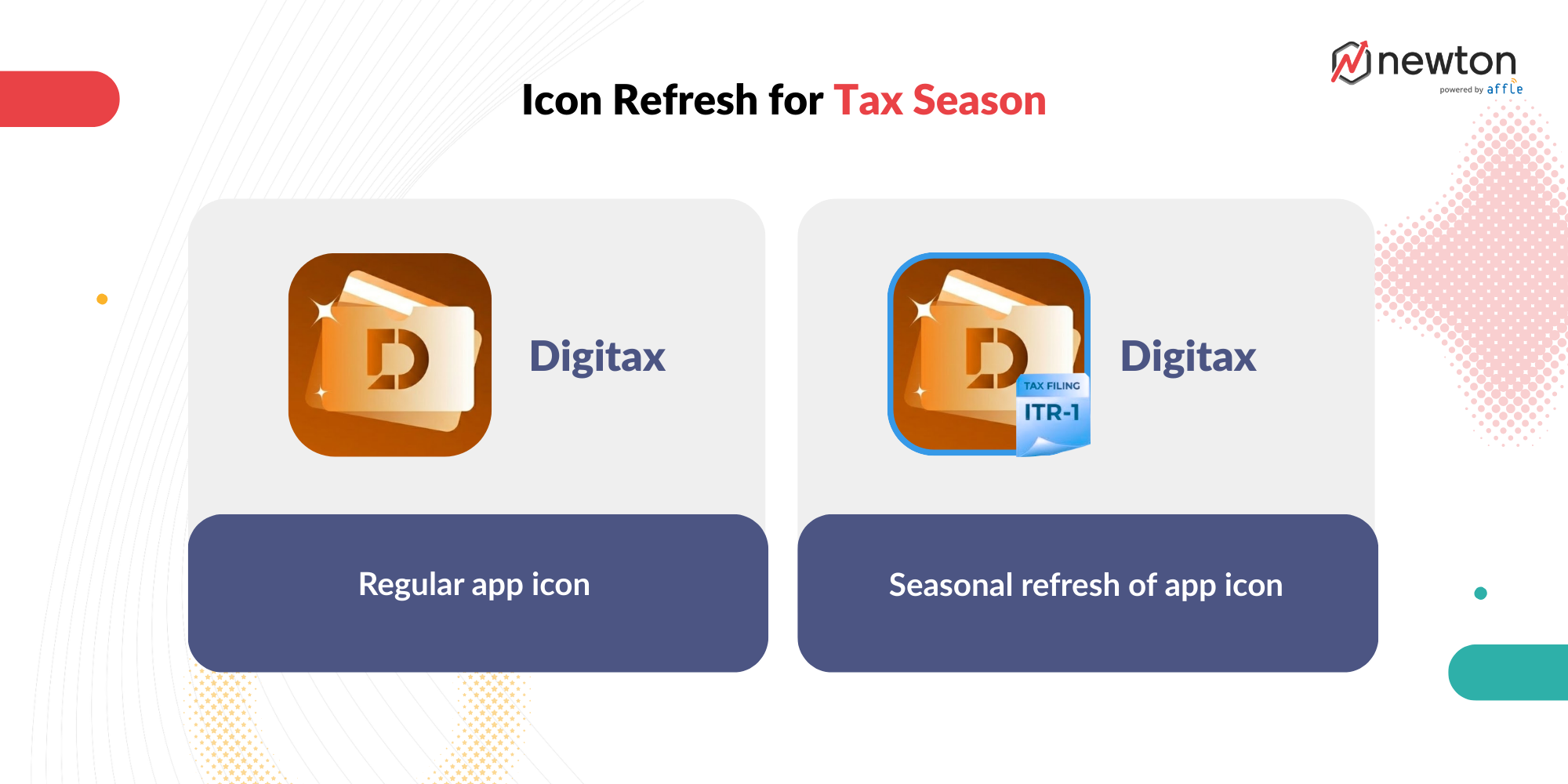
● Icon Refresh for Tax Season: Update your app icon with a tax-related makeover (e.g., calculator or tax forms). This seasonal update boosts relevance, improves App Store engagement, conversion and TTR during tax season
● Screenshot & Video Preview Updates (Organic): Update your App Store screenshots and video previews to highlight tax-related features, such as expense categorization for deductions. These updates can help optimize conversion efficiency, showcasing how your app streamlines tax prep and year-end finance management
3. Investment and Tax Saving Apps
Peak Demand: Users looking for ways to maximize their tax-saving investments before the end of the financial year are likely to turn to apps offering mutual fund investments, ELSS (Equity-Linked Savings Scheme), and other tax-saving tools.
App Marketing Strategy:
● Peak Demand: Users looking for ways to maximize their tax-saving investments before the end of the financial year are likely to turn to apps offering mutual fund investments, ELSS (Equity-Linked Savings Scheme), and other tax-saving tools
● Newton’s Telescope can be used to analyze your top competitor apps and keywords. Create campaigns with competitor keywords and use custom product pages showcasing why your app provides more value compared to the competition
● Split your campaigns based on regional user intent and preferences. Adjust your keywords based on tier 1 and tier 2 search intent, ensuring your ads are tailored to the local market and appeal to users' unique financial needs and priorities
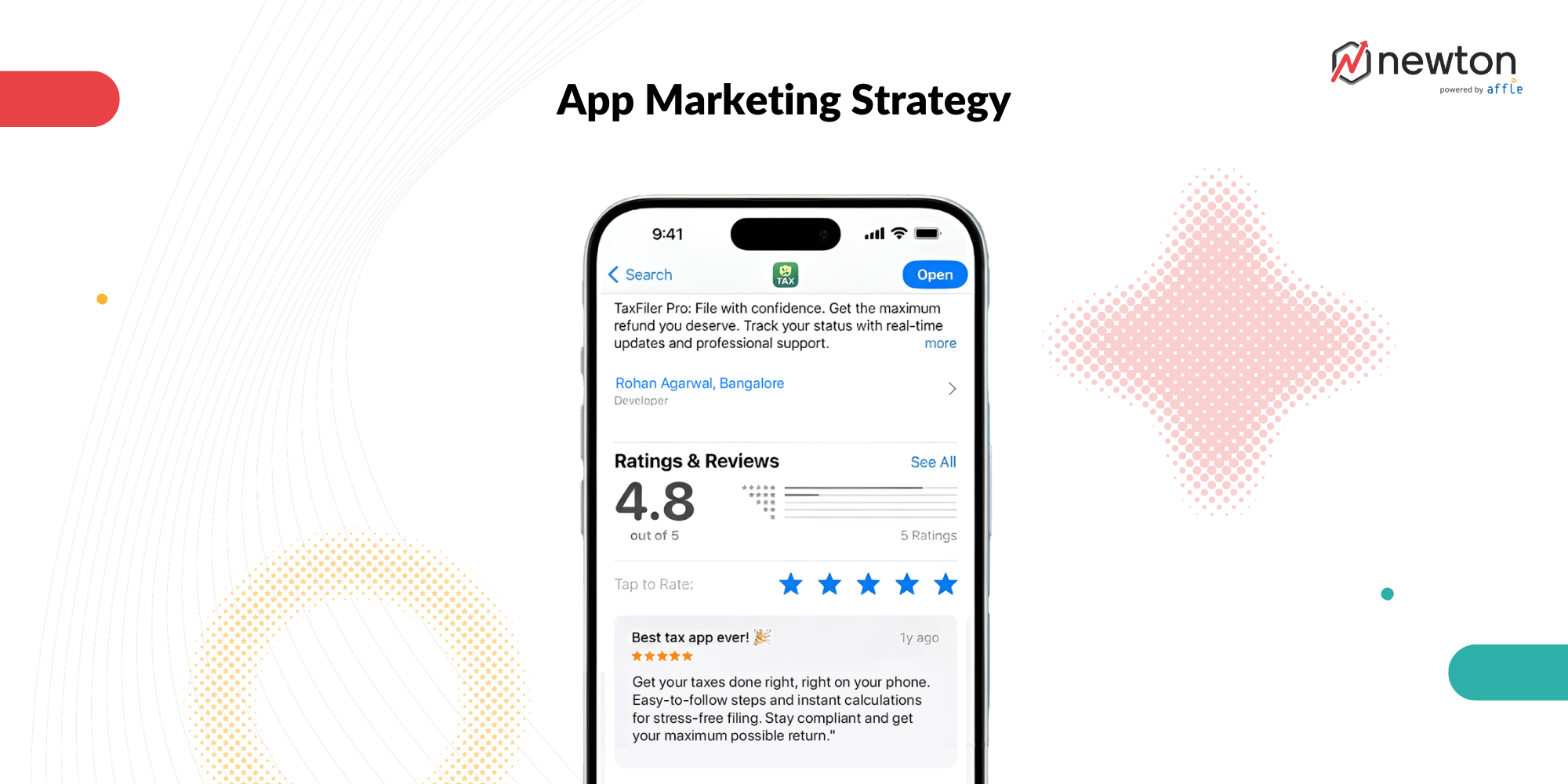
● Trust is crucial for investment apps. Encourage users to share their ratings and reviews on tax-saving achievements and investment wins within the app. Trigger rating prompts at high-satisfaction moments. Highlight these testimonials on your App Store screenshots and video previews to build credibility and attract new users
Conclusion: Maximizing Apple Ads for the Final Push
As the March 31st deadline approaches, the demand for major finance apps will intensify. By aligning your Apple Ads campaigns with App Store Optimization (ASO) strategies, you can ensure your app captures the high-intent audience just when they need your app the most. Whether you’re in the tax filing, expense tracking, or investment space, Apple Ads offers the precision and reach you need to capitalize on the last-minute rush for tax tools, helping you drive installs and user engagement during this peak season.
